
CERAMIC CARGO
Ceramic tiles to Iran: weight first, then packing and breakage
On this page
A trailer leaving Xinjiang with tiles rarely fills its 80 m³. It runs out of tonnes first, and everything else about the load — pallet counts, wooden crates, who pays for lashing, who carries the breakage risk — follows from that one number. This page is about the arithmetic and the edge of the service, not about a rate.
- Per truck: 80 m³ and 22 tonnes, whichever runs out first; tilt / curtain-side trailer, not a container
- Tile is dense: at 2,000 kg/m³ and above, the tonne limit arrives long before the volume limit
- Delivery at the destination customs, CPT or DAP; Iran clearance belongs to the buyer's broker
- Lashing, lifting, insurance and inspection are outside the rate; no rate figure appears on this page
- Exit gateways: Wuqia and Khorgos only
22 tonnes, before 80 m³
The border figure is arithmetic: 22 tonnes divided by 80 m³ is 275 kg/m³. Any cargo denser than that runs out of weight before it runs out of room, and fired ceramic is several times denser than the threshold.
Take 2,200 kg/m³ for the fired body as a working figure. Twenty-two tonnes is then roughly 10 m³ of solid tile. Cartons, pallet decks and the gaps between stacks add to that, but the load still occupies part of an 80 m³ trailer only — the rest travels as air.
The practical consequence is that this lane is sold by the truck, not by the cubic metre. A heavy cargo that leaves air in the trailer does not earn a rebate for the air. Anything above 22 tonnes or 80 m³ is reviewed separately and is never averaged into the base cap.
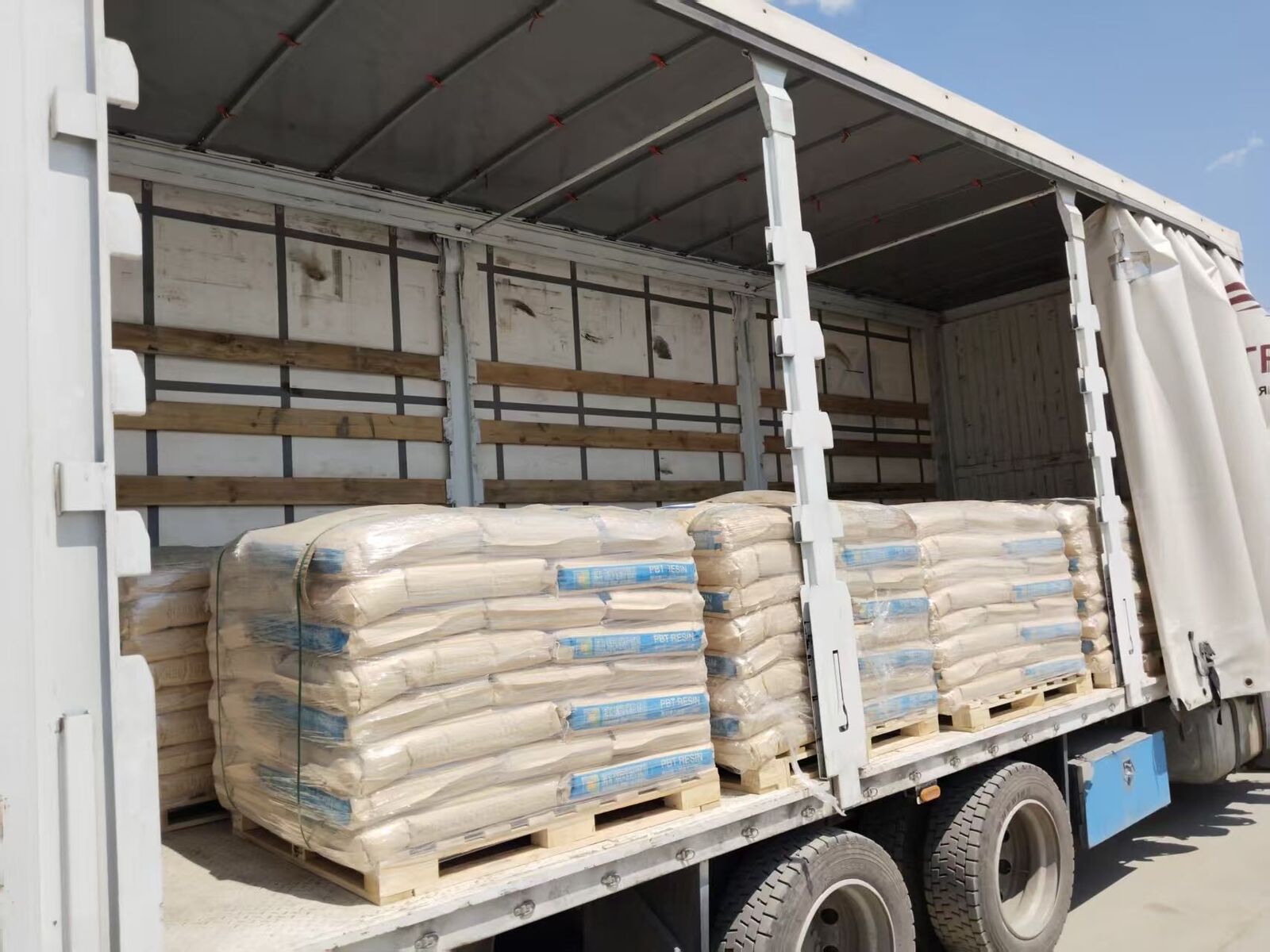
Pallets, crates and lashing
Tiles usually move shrink-wrapped on pallets or in wooden crates. The choice belongs to the shipper; we do not impose a packaging standard, but we do say what the loading plan needs.
Lashing and lifting are not in the rate. Both depend on a loading plan that nobody has seen when the rate is written, so both are priced on their own. Customs inspection at the destination follows the same logic.
The packing list should carry the carton count, the pallet count, the HS code and the gross weight per pallet, because customs values on weight and description rather than on an estimate. Breakage is recorded at the destination terminal and pursued through the claims route; insurance is the cargo owner's decision and sits outside the rate.
Wuqia or Khorgos
Both exit gateways are open. Wuqia runs through Kyrgyzstan, Uzbekistan and Turkmenistan: a direct truck transloads once at Bukhara, a transload truck once at Osh and again at Bukhara. Khorgos runs through Kazakhstan, Uzbekistan and Turkmenistan.
The Kyrgyz 0.4% applies on the Wuqia lane only. It is a tax rather than freight, and it is not in the rate.
Transit time is currently counted from the Wuqia border: 21–23 calendar days to the Tehran West Customs warehouse on a direct truck and 26–30 on a transload truck; Mashhad 18–21 and 24–28. The China origin warehouse to Wuqia is currently about 7 days, stated separately and never added on. The Khorgos lane publishes no day count; its transit time is confirmed with the written quote. These are current operating ranges, not a time commitment.
Torugart and Alashankou are not used at present.
Entry into Iran, and delivery
Arrival is through Sarakhs or Lotfabad. Those are entry gateways into Iran, not clearance points. Sale destinations are Mashhad Customs and Tehran West Customs (Shahriyar / Aprin); clearance and duty belong to the buyer's licensed broker.
Delivery is CPT or DAP — not door-to-door and not DDP. Clearance, insurance, inspection, lashing and lifting are outside the rate, and so are the optional services in Iran: clearance without unpacking, the national registration certificate, radiometry above the limit.
An enquiry needs five items: origin warehouse, destination customs, description with HS code, gross weight in kg, volume in m³. The quote comes back in writing with a reference number and a validity date.
FAQ
How much tile fits in one truck?
Up to 80 m³ and 22 tonnes, and with tile the tonne limit comes first: at 2,000 kg/m³ or more the trailer is only partly filled by volume. Anything above either limit is reviewed separately.
What are the transit times currently?
Currently from the Wuqia border: 21–23 calendar days to the Tehran West Customs warehouse on a direct truck and 26–30 on a transload; Mashhad 18–21 and 24–28. The Khorgos lane publishes no day count and is confirmed in the written quote. These are operating ranges, not a time commitment.
Is breakage covered?
Insurance is not in the rate; cover is the cargo owner's decision. Damage is recorded at the destination terminal and pursued through the claims route, and lashing or lifting is priced from the loading plan.
Can I send a part load?
No. This lane is full truck only. The trailer is booked whole, and there is no consolidated or part-load service on this site.
Related: Cargo damage claims · Packing for a tilt trailer · Wuqia or Khorgos · Get a freight quote